
Hospital & Clinical Communications
We translate, format and make accessible the documents your patients read, sign and take home.
A patient who cannot read the consent form has not given consent. Everything on this page follows from that. What a hospital buys from us is evidence. Evidence that a patient was given information they could read, in the format the rule requires, and a record of how that document was produced if anyone asks later. The translated words are the raw material. The evidence is the product.
The Translation Company Group has worked with healthcare and life-sciences organizations since 2005. Our public client history includes:
- Bon Secours Health System
- NYU Cardiovascular Center
- Scott & White Health Plan
- Teva Neuroscience
We use those names carefully: not every organization purchased every service described on this page, and we will not pretend otherwise.

We are the strongest on the written side of provider communication: hospitals, health systems, community health centers, physician groups, behavioral health organizations, outpatient and long-term care facilities, and public-health providers. Anything a patient has to read, understand, keep or act on.
Health plan member materials (ANOC, EOC, EOB, formularies, provider directories, denial and appeal notices) run on a different regulatory and production cycle. Clinical trials and regulated research content also belong in a separate specialist workstream.
If you already have a language access policy, we work inside it. Most of the hospitals we work with have one, and they do not need a vendor arriving with a better version of a document they already wrote. If you are still working out which languages you serve or which materials count as vital, we can help with that too.
Who this is not for: If you are collecting ten bids and awarding on the lowest per-word rate, we will not be competitive and we would rather tell you now than after you have spent a month evaluating us. We also decline deadlines we know we cannot meet properly. We learned this the hard way. In our first years we took work from organizations whose expectations we could not meet, it went badly for both sides, and we would rather be clear about the fit before the first call.
Patient Communications: Consent, discharge, education, intake, rights and digital content · Secure Workflow: HIPAA risk analysis, BAA chain, SOC 2 Type II, HITRUST e1 · Accessible Output: Section 504 / WCAG workflows, delivered in-house · System Integration: EHR and content-system workflows for recurring programs
ON THIS PAGE
- What Belongs in a Hospital Communications Program
- Risk Tiers: Not Every Document Gets the Same Workflow
- How the Work Actually Gets Done
- Where AI is Allowed in Healthcare and Where the Rule Says No
- What the Rules Require Right Now
- The Documents That Come Back Every Month
- Working With Your EHR and Content Systems
- How We Handle Patient Information
- Accessibility and Alternate Formats
- Interpreting
- How We Set the Program Up
- How to Evaluate a Healthcare Language Partner
- Frequently Asked Questions
- Talk With Us About Your Patient Communications Program
What Belongs in a Hospital Communications Program

The easiest way to under-scope hospital language work is to think only about consent forms. Consent matters, but a patient encounters registration forms before admission, a rights notice in the waiting area, medication instructions during treatment, discharge directions on the way out, an appointment reminder the next morning, a bill two weeks later and a portal message when test results arrive. When these communications are managed separately, the terminology drifts and the patient hears the hospital in several different voices.
We treat the written side as one system. Approved terminology, translation memory, source templates, accessibility rules are set once across every department instead of being rebuilt each time a document changes.
Patient-Facing Clinical and Administrative Documents
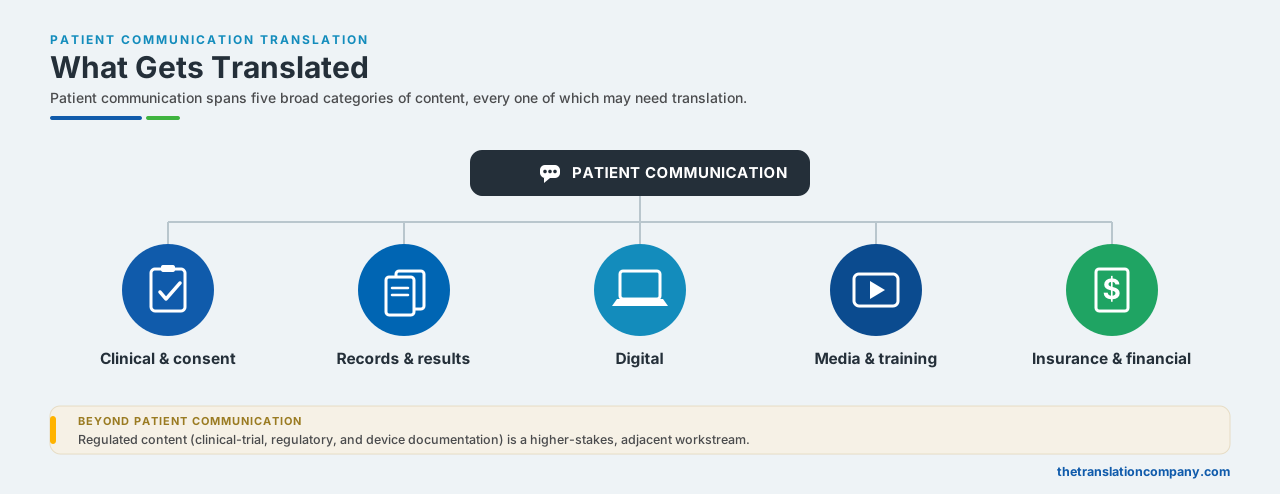
These are the ones a patient reads, signs or takes home:
- Informed consent forms, procedure explanations and pre-operative instructions.
- Discharge papers, after-visit summaries, wound-care instructions and follow-up guidance.
- Medication directions, dosage information and prescription labeling
- Patient education, disease-management, and preventive-care materials.
- Intake, registration, admission, medical history and consent-to-treat forms.
- Patient bills of rights, privacy notices, grievance and complaint forms, nondiscrimination notices and language-assistance notices.
- Appointment, recall, referral, results and care-management letters.
- Signage and wayfinding
Records and Individualized Communications
Some documents are written for one patient rather than published as a template: medical records, referral correspondence, laboratory and pathology reports, imaging reports, and vaccination records.
These arrive with protected health information in them and usually with a deadline attached. Two things have to be settled before work starts:
- How the file reaches us securely
- Who the translation is for: the patient, the next clinician, a court, an insurer or a regulator.
A record translated for continuity of care is not the same document as the same record translated for litigation.
Digital and System-Generated Communications
Patient portals, secure messages, appointment reminders, automated letters, and telehealth instructions now carry a large share of what a patient reads. Most are template-driven and change often.
This is what makes them worth putting under translation-memory. When you revise one line of a discharge template, we translate the revised line and reuse the approved wording for the rest. The alternative is paying to re-translate a document that is 95 percent unchanged.
Risk Tiers: Not Every Document Gets the Same Workflow
A cafeteria flyer, a condition-management brochure, a surgical consent form and an opioid dosing instruction are all hospital communications. They should not go through the same process, and paying for them as though they should, is how language budgets get wasted.
We sort the documents into. Yours may need different boundaries and we will adjust them, but the rule underneath does not change: the greater the consequence of an error, the more human review, and documentation the document gets.
| Risk | Examples | What We Do | Why It Matters |
|---|---|---|---|
| Lower | Internal notices, cafeteria menus, general information | A qualified translator, working from your glossary and translation memory | Nobody gets hurt if this is late, but the hospital’s own terms still have to match everywhere else |
| Moderate | Patient education appointment and service letters, standard forms | Translate, edit, proofread. A check that the reading level suits patients. Layout and accessibility where the format needs it | A correct translation the patient cannot follow has not done its job |
| High | Consent, discharge, medication, rights, grievance, financial-assistance | Translate, edit, proofread, then healthcare subject-matter review and a documented sign-off. Back-translation or an independent accuracy check where your policy asks for it | A mistake here can affect someone’s safety, their consent, or their access to care. This is where the money should go |
| Regulated / specialized | Research, device, regulatory, and other content governed by separate standards | Specialist linguists and controls set per project | Different rules apply. This should not be run through the patient-materials process |
This risk-based approach also prevents a common procurement mistake: paying for the maximum workflow on every sentence or, at the other extreme, applying a light workflow to content whose errors carry legal consequences. So the right question to ask a vendor is not whether they use humans or machines. It is which controls this particular document gets, and what proof exists afterwards they were applied.
You set the tier. We will tell you when we think a document has been placed too low, and we will put that in writing.
How the Work Actually Gets Done
Every vendor will tell you they use qualified translators. The differences show up in what happens between the first draft and the finished file.
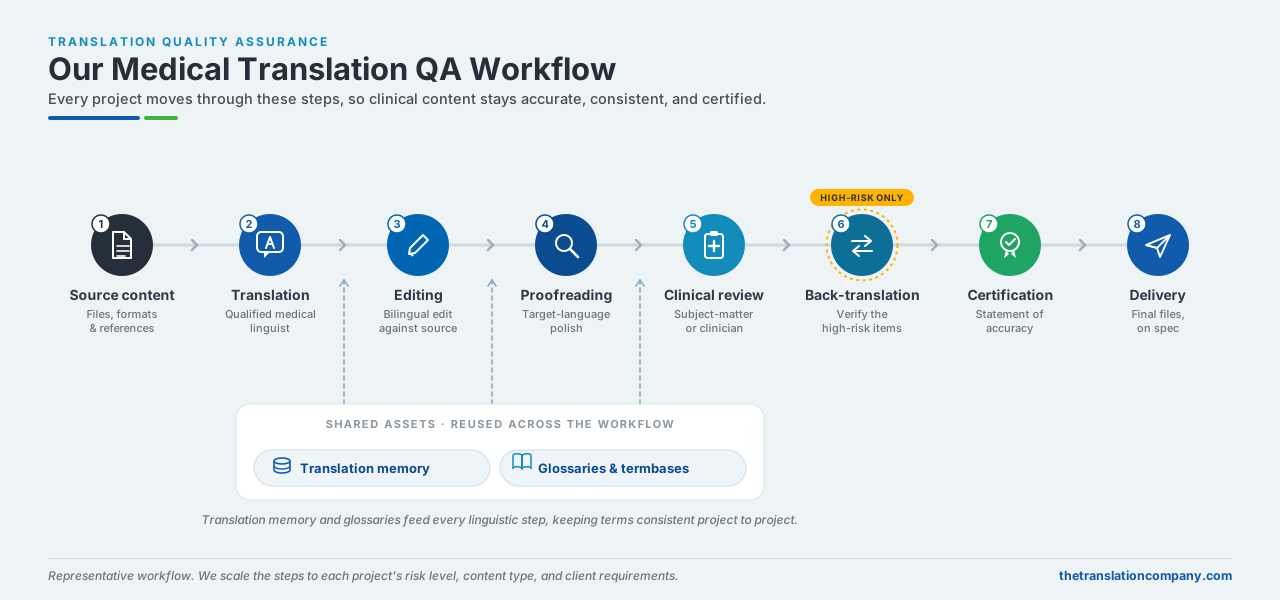
Translate, Edit, Proofread
For patient-facing work, the process looks like this:
- A translator works from your approved source
- A second linguist edits the translation against that source, line by line
- A third proofreads the finished target-language file.
We operate to ISO 17100, and to ISO 18587 where machine translation is part of an approved workflow. We are not certified to either and we do not say we are. What the standards give us is discipline: defined roles, a review step that cannot be skipped, and a record of who did what.
Your Terminology Kept in One Place
A hospital says the same things in a hundred places. Facility names, program names, medication instructions, rights language, privacy wording. We build a glossary and a translation memory for your account so those stay fixed, and so a patient does not meet the same term translated three ways by three departments.
The bottom line is that the more you translate with us, the bigger your translation memory gets. It is always for you to take with you whenever you want.
What We Mean By Clinical Review
Clinical review means a reviewer with healthcare knowledge checks the translation. It does not mean a doctor signs it. If you need a licensed physician, pharmacist or nurse to review and sign, say so in the scope and we will staff it and price it. If you do not say so, do not assume it.
Back-Translation
Back-translation can be useful when you want to double-check that the original meaning was kept in the translation. A separate linguist translates the target-language text back into the source language, without seeing the original, so discrepancies can be identified and resolved. It is a genuine check and it costs money so we do not put it on routine documents. Use it for consent, for medication instructions, and where a regulator or your own policy asks for it.
Certified Translations
A certified translation carries a signed statement that the translation is accurate and complete. Courts, insurers, immigration authorities and some regulators require one and we provide them. Most hospital documents do not need one. A certificate attests to accuracy, but does not create it. A consent form needs the right people working on it, not a cover sheet.
Where AI is Allowed in Healthcare and Where the Rule Says No
Most hospitals we talk to want the same thing: a clear line for when automation is allowed and when it is not. The question of when a machine may translate a patient document is already answered in federal regulation and here is what it says:
45 CFR Section 92.201(c)(3) says that when a covered entity uses machine translation, a qualified human translator must review the output in three situations:
- Where the text is critical to rights, benefits or meaningful access
- When accuracy is essential
- When the source language contains complex, non-literal or technical language
Consent, discharge, medication, rights and many other hospital communications can fall squarely inside those categories. For most of what a hospital gives a patient, unreviewed machine output is not just cheaper, but a non-compliant option.
We run modern tools the way any professional uses an instrument: with the judgment to know when they truly help and when they don’t. Our AI vendors are contractually forbidden your data or retain it for their own use, and we will put zero-retention terms in writing when you ask for them.
None of this means automation has no place. High-volume, repetitive, lower-risk content is a reasonable use for it, and we will tell you when your content qualifies. Choosing not to automate anything would cost you money for no safety benefit.
What we will not do is let you buy it without knowing. “AI-powered” is not a quality standard. Before you accept any workflow, from us or anyone, ask five things:
- Does this contain sensitive health information?
- Can an error here affect someone’s rights, their benefits or their care?
- Does Section 92.201(c)(3) require human review of it?
- Is the data retained anywhere after the job closes?
- If a regulator asks in two years how this document was produced, can you answer?
What the Rules Require Right Now
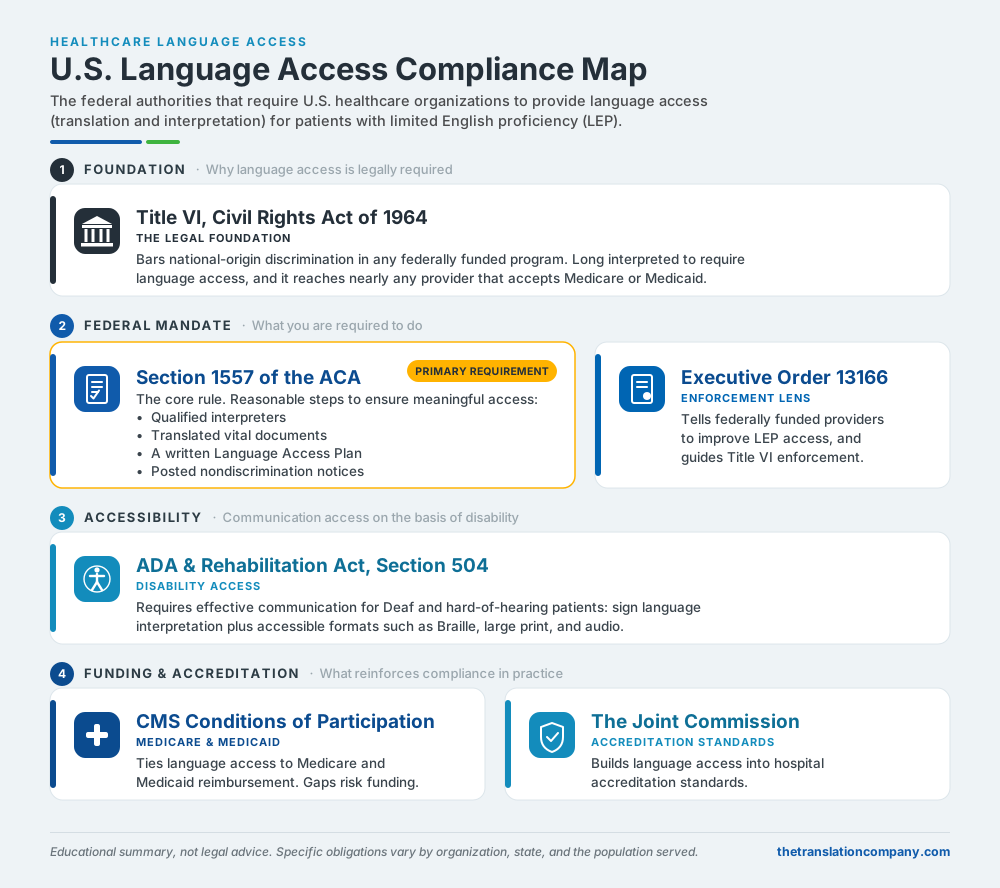
A lot of what is written about healthcare language access is out of date and copying it forward is a mistake. We have not built this page on Executive Order 13166, and we are not going to pretend that one old federal “safe harbor” answers every question a provider has. What you have to do depends on the document, the patients you serve, the state you serve them in, how you are funded, and what your own policy already promises.
Section 1557: What You Must Provide
45 CFR 92.201 requires you to take reasonable steps to provide meaningful access to any patient with limited English proficiency who you serve or are likely to affect. The language help you provide has to be accurate, timely, free of charge to the patient, and private. Written work needs a qualified translator, while spoken work needs a qualified interpreter.
The same rule limits who can do that work. Unqualified staff, adults who came with the patient, and children are ruled out except in narrow circumstances.
This is the part hospitals underestimate. “Someone on the floor speaks the language” is not the same thing as a qualified language service.
The Notice Is a Separate Job from the Documents
45 CFR Section 92.11 is a different obligation, and people mix the two up. It says you must tell patients that language help and auxiliary aids are free. The notice must be provided in English and at least the 15 languages most commonly spoken by people with limited English proficiency in your state. It also says where the notice has to appear: your website, in the building where people can see it, and inside a set list of documents such as intake forms, privacy notices, consent materials, discharge papers, billing and collections communications, complaint forms and patient or member handbooks.
That is as much a production problem as a legal one. If you serve multiple languages and the notice appears in multiple documents, you need approved language, consistent formatting, current versions and one wording change in the English source means you have to update all files, all of which have to match. If you miss one, the mismatch is on paper with your name on it.
Section 504: Accessible Web Content, Mobile Apps and Documents
HHS’s Section 504 now requires web content and mobile apps to meet WCAG 2.1 AA. In May 2026, HHS extended the compliance timeline by one year. If you have 15 or more employees now, generally you have until May 11, 2027, and if you have under 15 employees, you have until May 10, 2028. The rule reaches hospitals, community health centers, primary-care centers and other recipients of HHS funding.
Some older and individual documents are exempt. That does not remove the underlying duty to give a disabled patient the information when they need it, so the useful first step is working out which document families are public, in use and matter, not running every historical PDF through a checker and panicking at the result.
Deaf and Hard-of-Hearing Patients Are a Separate Duty
Language access and disability access are different obligations and they are not substitutes for each other.
An accessible document library does not cover a Deaf patient who needs an interpreter in the room. An interpreter in the room does not cover the written instructions that patient takes home. Hospitals get caught having done one and assumed it answered the other.
The Documents That Come Back Every Month
Most hospital translation still works like this. A department emails a PDF on a Wednesday and asks for “Spanish by Friday.” It arrives, someone files it somewhere, and the same thing happens again next month with a slightly different version of the same form.
The documents below are the ones that come back. They are worth setting up properly once.
Consent and Procedure Information
Consent has to be right, readable, and in the room when the patient is. Miss any one of the three and the consent does not hold.
If you have two hundred standard consent templates, translating them one at a time after a patient shows up is the worst version of this. The patient waits, the surgeon waits, and somebody makes a judgement call about proceeding. Translate the library in advance and the form is already there.
When the English changes, we find what changed, update only those language versions, keep the approved terms, and record what was released and when. That record is the thing you produce if the consent is ever questioned.
Discharge and After-Visit Instructions
Discharge instructions may matter more than the consent form. The patient signs consent with a clinician standing there. They read the discharge sheet at home, alone, at nine at night, deciding whether the thing happening to them is normal.
Medication schedules, warning signs, wound care, diet, follow-up and return instructions all have to survive translation exactly. Pre-translate the standard instruction blocks, load them into your content system or EHR, and the common ones are ready before anyone needs them.
Patient Education and Health Literacy
A translation can be word-perfect and still fail, because the patient cannot follow it. We will work to a reading level you set, simplify wording without touching the clinical meaning, and tell you when the English source is harder than it needs to be. That last one saves the most money. Difficult English becomes difficult Spanish, difficult Vietnamese and difficult Arabic, so fixing one sentence at the source fixes it twelve times over.
Plain language is not “dumbing anything down. In healthcare it is often a safety control.
Rights, Grievance and Financial Communications
Rights notices, privacy notices, grievance forms, financial-assistance applications and collections letters get treated as paperwork because nothing clinical happens in them.
Then a patient misses a 30-day appeal window they could not read, or does not apply for charity care they qualified for. These go through the same controls as consent.
Portals, Mobile Content and Secure Messages
Portal and mobile content creates a different problem: volume and change frequency. A single new phrase may appear in several channels, and a minor English update can create dozens of inconsistent translated strings if each department works independently. Connecting the translation memory to your content process can keep repeated wording stable. Only what actually changed goes out for translation.
Working With Your EHR and Content Systems
Most hospital translation still moves by email. Someone exports a file, attaches it, waits, saves the reply to a shared drive, and hopes the version that comes back is the one that goes out.
We can do better than that, though how much better depends on what you run and what your security team will allow.
At the simple end, that is a controlled export and import: fixed templates, a naming convention everyone follows, version control, and a secure portal instead of email attachments. Unglamorous, and it solves most of the problem.
At the deeper end, it is structured file exchange or an API handoff, so documents move between your system and ours without anyone attaching anything.
A useful setup should:
- Stop staff copying and pasting, and stop the wrong version going out.
- Keep document IDs and version history, so you can trace what was translated and when.
- Send high-risk documents down the review path automatically, rather than relying on someone to remember.
- Return files in a format that loads straight back in, without rework.
This changes what urgent work costs you. Vendors compete on rush turnaround because it is easy to sell. We would rather you needed less of it. Work out which documents keep becoming emergencies, translate them in advance, and put them where staff already look. The rush fee you do not pay is worth more than the rush fee you negotiate down.
How We Handle Patient Information
Healthcare translation can expose highly sensitive information. To translate a medical record, someone has to read it. That is the part of this business people forget. A translator working on a referral letter sees the patient’s name, their date of birth, their diagnosis and often their address.
So the question is not whether we hold a certificate. It is who sees the file, where it sits while they work on it, and what happens to it afterwards.
HIPAA and the BAA Chain
We perform HIPAA risk analysis and will sign a Business Associate Agreement scaled to the work. The signature is the easy part. What matters is whether the same obligations reach the translator who opens the file, the editor who checks it, and every system the document passes through on the way. An agreement between you and us protects nothing if it stops at us.
SOC 2 Type II for Control Evidence
A SOC 2 Type II report is what a security team asks when they want proof from someone other than us. It covers whether our controls are well designed and whether they actually worked over a period of months, rather than on the day of an audit. We bring it out when you are reviewing security. It has nothing to say about translation quality and we will not pretend otherwise.
HITRUST e1: Where Healthcare Buyers Expect Healthcare-Specific Assurance
HITRUST e1 is a security framework your compliance and vendor-risk teams will already know. It comes up during onboarding, security review and risk assessment, and it is there to answer that question when they ask it.
ISO 27001:2022 for Information-Security Management
ISO 27001 covers how we manage information security as a system: written rules, assigned owners, regular review. The point of it is that data handling does not depend on each project manager’s own habits. It tells you the framework exists. It does not tell you how your documents move through it, which is what the rest of this page is for.
AI Data Handling
Our AI policy is part of the same security posture. We use professional-grade tools and our vendors are contractually forbidden to train on your data or keep it, and we will put zero-retention terms in writing. If you want a class of content handled with no AI at all such as records, say, or anything containing PHI, tell us at setup and we will route it that way.
Accessibility and Alternate Formats
A translated document is not accessible merely because the English version was accessible. For example, German runs typically about a third longer than English, so line breaks move and the page reflows. Tables break. Reading order shifts. Arabic and Hebrew read right to left, which means the whole structure has to be rebuilt rather than translated. And the alt text on every image has to exist in the language of the document, which means somebody has to write it in that language.
Twenty languages is twenty separate accessibility jobs. A remediation shop that receives your finished PDF pays that cost twenty times over. We tag the source file once and check twenty times.
We work from Word, PowerPoint, Excel, InDesign and PDF and carry the accessibility decisions through every language version. The work is done in-house led by an accredited practitioner with IAAP ADS and DHS Trusted Tester credentials. In practice this means the recurring material like consent packets, patient education, public notices, gets structured properly at the source, so each language version starts from a good file instead of being repaired at the end.
If you take HHS funding, the Section 504 deadlines apply to you, and the first problem is that nobody knows how many documents there are. We can help you count them, sort out which ones are actually still in use, and find out whether the source files still exist because a PDF with no InDesign file behind it costs several times more to fix. There is no point spending the budget on documents you are about to replace anyway.
Braille, Large Print, and Audio
Braille, large print, accessible electronic text, audio, plain-language or easy-read adaptations and fulfillment requirements belong to our Alternate Formats program. However, they usually start from the same source document as the translation. That is the whole argument for doing them together. One document takes one route: source file, translation, tagging, alternate format, and out. Split it across four vendors and each one starts by rebuilding what the last one already did.
Interpreting
Written translation is what we do best, but hospitals also need people who speak and sign, in the room or on the line. We arrange that through partners we have worked with rather than pretending we run a call center with a thousand interpreters.
Three ways it gets delivered, and the encounter decides which:
- Over the phone – Fast, available on demand, fine for scheduling, results and routine questions.
- Video – Where seeing each other matters, and the only remote option for sign language.
- In person – A serious diagnosis, a consent conversation before surgery, behavioral health, end of life. Anything where someone may need to sit with the news.
Section 1557 also sets technical standards for remote interpreting where it is used to provide meaningful access.
Translation and interpreting are different professions. A good medical interpreter is not automatically a good medical translator, and the credentials are different. What a hospital can do is run both under one language access plan, with one set of terminology, so the interpreter in the room and the discharge sheet the patient takes home use the same words for the same things.
We run the written side ourselves and bring in the spoken side where you need it.
How We Set the Program Up
You already have a policy. You have compliance requirements, civil rights guidance and a way of doing things that people are used to.
Our first job is to learn all of that, not to turn up with a slide deck about best practice and ask a hospital to reorganize itself around a translation vendor.
Start with the Documents and Systems That Exists
The first conversation is short and it needs six things:
- A sample of the documents, not all of them
- The languages you currently serve
- Where the content lives and what generates it
- Your security requirements
- How often the material changes
- Who signs off on wording today
If you do not have a full inventory, that is normal and we can help you build one. If nobody has checked the language list against your actual patient population in a few years, that is also normal and worth doing before you translate anything.
Build the Language Assets Once
Whatever has already been translated and approved, send it. Old files, a glossary somebody made a few years back, the wording legal signed off on last year. We load it in at the start so the first job benefits from work you already paid for.
Agree on the Urgent Path Before You Need It
Some of this work will become urgent. It always does.
The time to decide who can approve a term, what counts as urgent, when a clinical reviewer gets added and whether AI is allowed is not at 4pm on a Friday with a discharge packet waiting. We write those rules into the account at setup, so nobody is improvising.
And when something is genuinely urgent, call and say so. A person who can commit capacity will take the call.
Measure the Right Things
Volume and turnaround are easy to measure, which is why most reporting stops there.
The numbers that tell you whether the program is working are different. How often translations come back for revision. Which document families keep becoming emergencies. Whether staff can find the approved version without asking anyone. How much of your content is being reused rather than re-translated.
If those are getting better year on year, the program is working. If they are flat, you are buying translations rather than running a program.
A Relationship Model Built for Continuity
Eleven people work continuously with this firm, plus about thirty linguists on assignment. That is the whole company.
It is a smaller number than most vendors you are considering, and we think it is the point. You work with the people who own the firm, not a rotating cast of junior account managers. A county that has been handed to four different account managers in two years knows exactly what eleven people means.
Our translators stay too. The average tenure is over a decade, and the reason is not complicated. We pay translators fairly, and we pay them on time. We recognize that translators are not machines. They have loved ones, and they live a life full of events.
In an industry where the individual translator too often holds the short end of the stick, keeping the same people for a decade is not generosity. It is how the quality stays where it is.
How to Evaluate a Healthcare Language Partner

Any vendor can produce a good sample. Samples are chosen, prepared and checked by the best person available, and they tell you nothing about the two hundredth document.
What separates vendors is what happens after the first project. The questions below are the ones we would ask, and we are content to be measured against them.
- Who qualifies the linguists working on patient-facing medical content, and how is second-review documented?
- What changes in the workflow when the content involves consent, medication, rights, or benefits?
- Will you sign a Business Associate Agreement and how far down your chain does it reach, to the individual translator?
- What SOC 2, HITRUST or information-security evidence can be provided to vendor risk management?
- What are your AI vendors contractually forbidden to do with our data, and will you put it in writing?
- Can you work with our systems, or does our staff build a manual process around you?
- Who owns the translation memory and glossary if the relationship ends?
- Can you produce accessible multilingual Word, PowerPoint, Excel, InDesign and PDF in every language, or does accessibility go to a separate shop afterwards?
- How are rare languages, surge volume and interpreting needs handled?
- Who answers when something is genuinely urgent, and do you have authority to commit resources?
State Rules: California, New York and Texas
Federal rules are the floor. States build on top of them, through licensing rules, patient rights statutes, Medicaid and managed care contracts, and whatever your own policy already commits you to.
These three are where most of our healthcare work sits, and they show how different the answer can be. California legislates hospital language assistance directly. New York runs a formal program with response times measured in minutes. Texas has no general hospital rule at all, which surprises people.
1. California
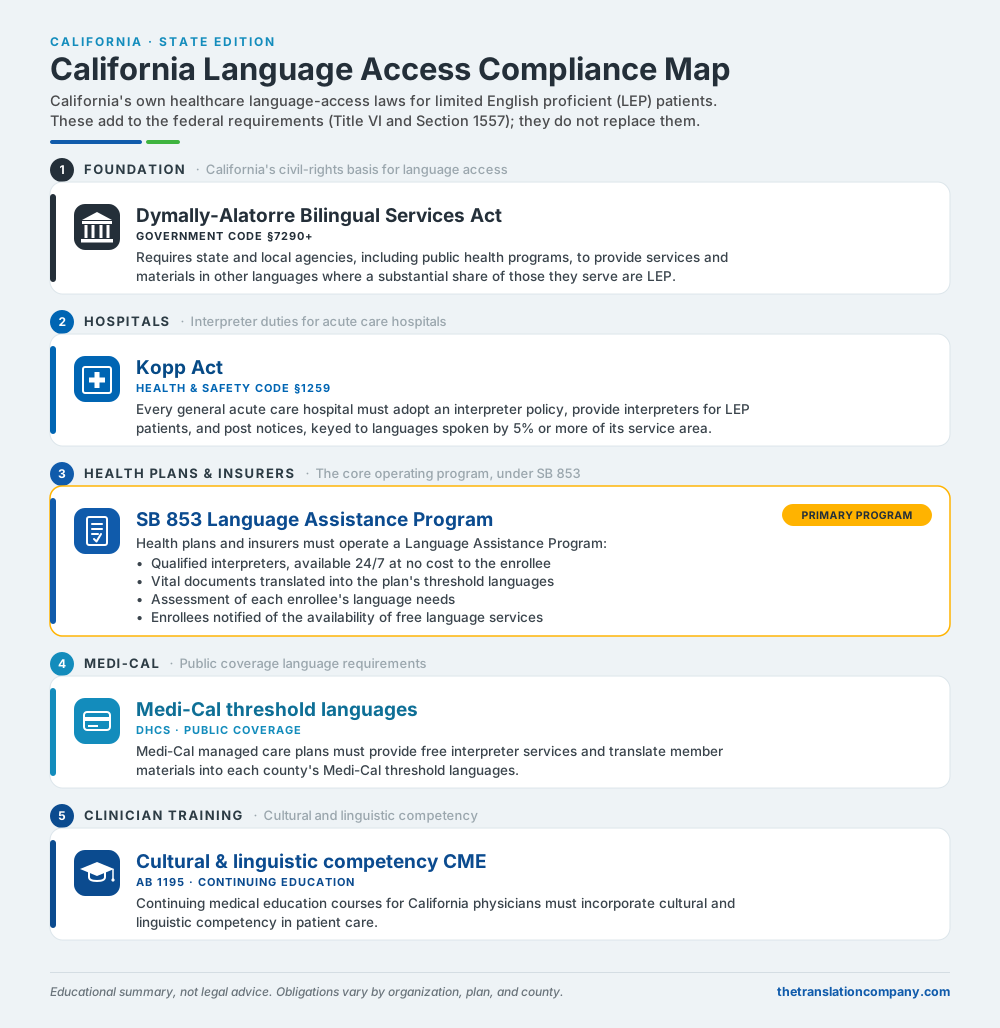
California Health and Safety Code Section 1259 applies to every licensed general acute care hospitals. It requires you to:
- Adopt a language assistance policy and review it every year
- Make interpreters available on site or by phone, around the clock, as far as possible
- Publish the policy and a notice of language assistance on your website
- Post notices where patients will see them
- Record each patient’s primary language and dialect
- Review your standard forms and decide which ones get translated
That last one is a translation obligation written into hospital licensing law, and it recurs every time the form library changes.
Section 1259 also has its own 5 percent test: a language group counts if it is at least 5 percent of the area the hospital serves, or 5 percent of the patients it actually treats.
Note that this is a California hospital rule. It is not the old federal safe harbour, which no longer exists, and it does not apply in Texas or New York.
We handle the document side of this: the inventory of what exists, the multilingual templates, the website notices, the patient forms, and the accessibility work that now sits alongside them.
2. New York
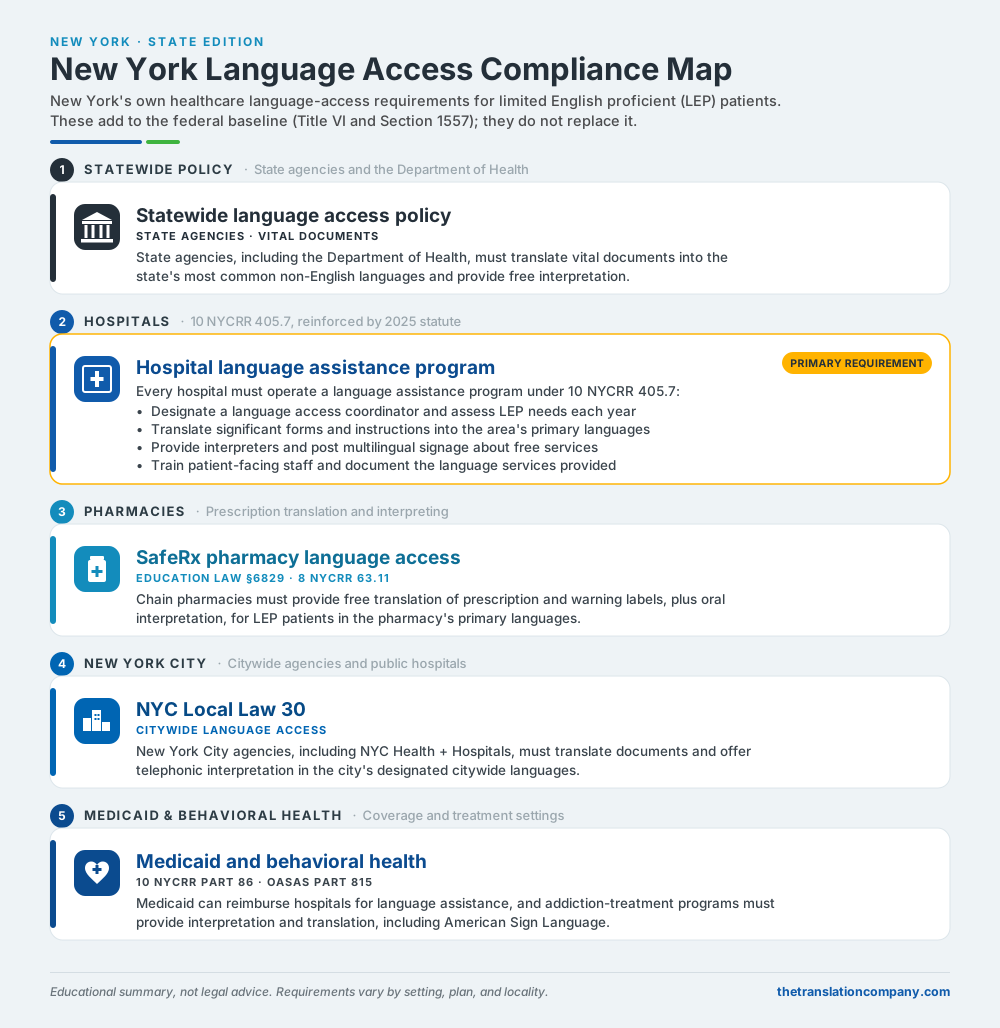
10 NYCRR Section 405.7 requires every hospital to run a Language Assistance Program. The rule names what has to be in it:
- A designated Language Assistance Coordinator
- Written policies and procedures
- Public materials explaining how to get free language help
- Staff training and signage
- Each patient’s preferred language identified and recorded
- The medical record showing the language need, and whether services were accepted or refused
Then it puts a clock on it. Twenty minutes for an interpreter in inpatient and outpatient settings. Ten minutes in the emergency department. Rural hospitals have limited alternatives.
It also restricts family and friends as interpreters — only if the patient agrees after free interpreting has been offered and turned down and sets specific limits on anyone under 16.
On the written side, New York requires an annual needs assessment. You use demographic and hospital data to find every language group above 1 percent of your service area, and your significant forms and instructions must be available in those languages.
Read that as a recurring obligation, because it is one. The language list moves. The form library moves. And you have to be able to show that what is translated today matches this year’s assessment, not the list somebody built a few years back and never revisited.
This is a program, not a series of projects. Which means the vendor needs to map your significant forms, hold the approved versions, keep the language list tied to the assessment, and update every language when the English changes.
3. Texas
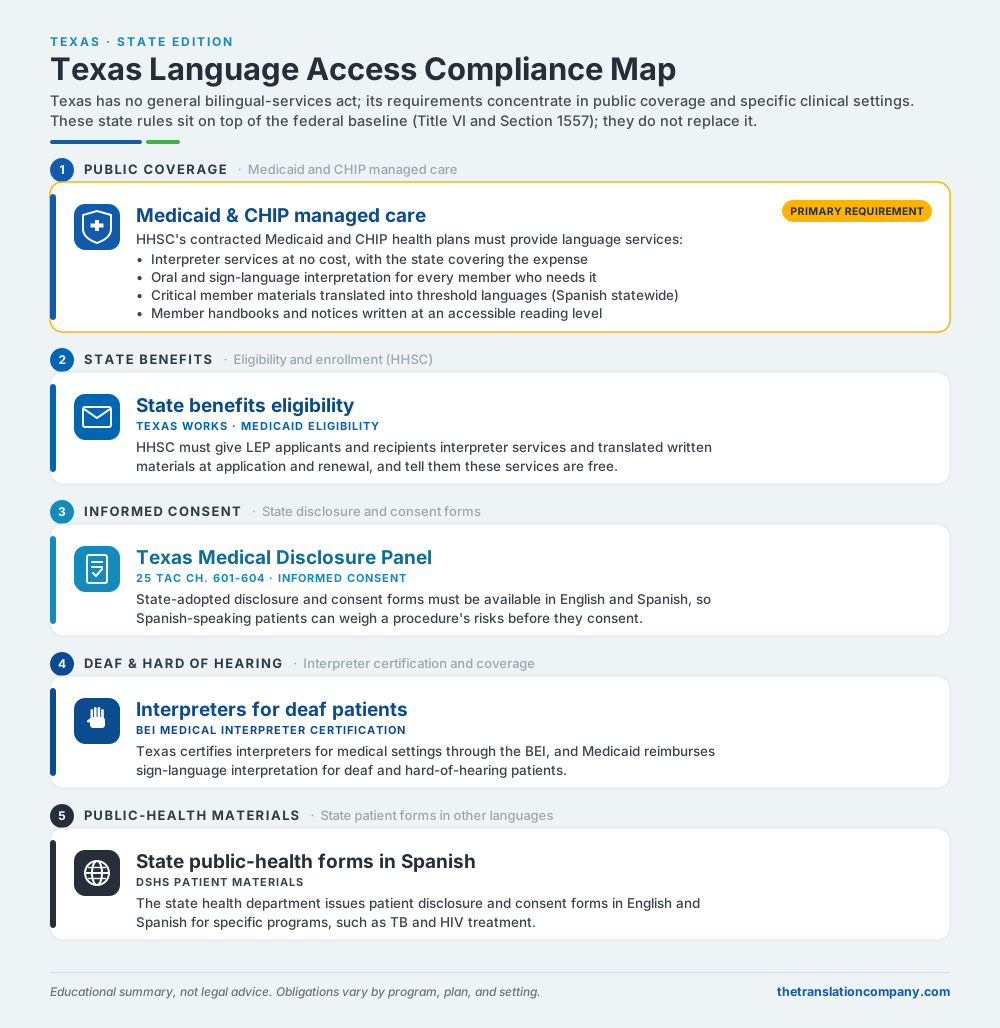
Texas has no equivalent of Section1259 or Section 405.7. There is no general hospital language assistance statute.
What applies instead is a mix: the federal rules above, disability access law, Medicaid and managed care contract terms, accreditation requirements, and whatever your own facility policy says. The obligations are real. They are just distributed rather than collected in one place.
So “What is the Texas threshold?” is the wrong question. There is not one. The useful sequence is to work out which rules reach your facility, who your patients actually are, what your payer contracts require, which materials affect someone’s rights or care, and what your own policy has already promised.
Then build the document inventory against that.
We are not going to publish a fifty-state checklist. They read well and they are wrong within a year, and none of it is legal advice anyway.
What we do is build against what you and your counsel identify. Where the rule is specific, as in California and New York, we build to the rule. Where it is spread across contracts and programs, we build to your document set instead.
Frequently Asked Questions


1. Are hospitals required to translate every patient document into every language?
No, and anyone who tells you otherwise is selling volume. Section 1557 asks for meaningful access which depends on how important the communication is and who you serve. What hospitals actually do is work out which documents are vital, which languages they serve, what their state adds on top, and then write that reasoning down. The written reasoning is what protects you, not the number of languages.
2. What does Section 1557 require for written patient communication?
45 CFR 92.201(c)(3) requires covered entities to take reasonable steps to provide meaningful access to individuals with limited English proficiency. When translation services are required, the entity must use a qualified translator. Required language assistance must be accurate, timely, free of charge to the individual and protective of privacy and independent decision-making. The rule also requires qualified human review of machine translation when accuracy is essential, when material is complex or technical, or when the text is critical to rights, benefits or meaningful access.
3. Do we have to post notices as well as translating documents?
Yes, and they are separate obligations that people mix up constantly. The notice of availability under 45 CFR 92.11 tells people that language assistance and auxiliary aids are available free of charge when required. The rule specifies English plus at least the 15 most commonly spoken LEP languages in the relevant state or states and lists communications in which the notice must appear. Separately, the institution still needs a meaningful-access process for deciding when underlying patient communications themselves require translation. The notice obligation is not governed by any threshold. It applies regardless.
4. Which patient documents should we translate first?
Start with consequence first and then frequency. Consent forms, discharge instructions, and medication information come top on almost every inventory we have seen, followed by intake forms, rights and grievance materials, and the nondiscrimination notice.
One thing people miss: check how often the English changes before you translate it. A form that gets revised quarterly will cost you three times over if you translate it into twelve languages the week before legal rewrites it.
5. Can you help us inventory our patient-facing documents?
Yes. Almost nobody has a complete inventory. Documents live in departments, shared drives, portals, EHR templates and somebody’s desktop, and no one person has ever seen all of them. We can help identify document families, owners, source formats, languages, risk level, current translation status and accessibility needs. The result can then be used to build a phased production roadmap rather than sending random files for translation as problems arise.
6. How do you protect patient health information (PHI)?
We protect patient health information by not leaving it to whoever is running the project. We perform HIPAA risk analysis and sign a Business Associate Agreement, and the obligations in it carry through to the translator who opens your file and the editor who checks it.
Our AI vendors are also contractually forbidden to train on your data or keep it, and we will put zero-retention terms in writing.
7. Will you sign a Business Associate Agreement?
Yes, where the engagement requires one. Just as important, we pay attention to the downstream chain. If linguists, subcontractors or systems handle covered information, the contractual and operational controls need to extend to those participants rather than stopping at the master agreement between the hospital and The Translation Company.
8. Do you use AI or machine translation on healthcare content?
Sometimes, and never without a rule about when. The workflow depends on risk, client policy, data sensitivity and the applicable regulation. For content where machine translation is used and 45 CFR 92.201 requires qualified human review, we build that review into the process. Clients can also establish content classes for which AI is prohibited. Our AI vendors are not permitted to train on client data or retain it for their own use, and zero-retention terms can be provided in writing.
9. Is human review required for every machine-translated healthcare document?
Not every document, but more than most people expect. Section 92.201(c)(3) requires it where the text is critical to rights, benefits or meaningful access, where accuracy is essential, or where the source is complex or technical. In a hospital that covers consent, discharge, medication and rights material which is most of what patients actually receive.
Lower-risk content can be handled differently. Classify first, then choose the workflow.
10. Do you provide certified medical translations?
Yes, when the receiving institution, regulator, court, insurer or other use case requires a certification statement. A certified translation is a signed statement of accuracy and completeness; it is not a universal requirement for every hospital brochure, consent template or patient letter. We distinguish between a document that needs professional healthcare translation and one that additionally needs a formal certification.
11. What are the new HHS Section 504 accessibility deadlines?
HHS extended the web and mobile accessibility compliance dates in May 2026. Recipients with 15 or more employees now generally have until May 11, 2027, and recipients with fewer than 15 employees until May 10, 2028, to meet the applicable WCAG 2.1 AA requirements. Document libraries still need to be evaluated carefully because exceptions exist for some preexisting and individualized documents, while the underlying obligation to make information accessible to people with disabilities remains.
12. Do you provide medical interpreting?
Yes, we provide medical interpreting through partners we work with regularly. Written translation and multilingual document production are what we do ourselves, and we would rather be clear about that than imply we run a call center with a thousand interpreters on it.
We can arrange over-the-phone, video and on-site interpreting alongside the written work. For most hospitals the value in that is not the sourcing, it is that the interpreter in the room and the discharge sheet the patient takes home end up using the same words for the same things.
13. Can bilingual staff translate our patient documents?
Speaking a language and translating into it are different skills. Section 1557 treats them as different roles: distinguishes qualified translators, qualified interpreters and qualified bilingual or multilingual staff.
For example, a nurse who grew up speaking Tagalog may be a superb nurse and still not be the person to render a consent form. It is not a slight on the nurse. Translation is a writing discipline with its own training and its own review step, and doing it off the side of a clinical shift means nobody checks the result and nobody can say later who wrote it.
14. How quickly can you handle urgent patient communication?
We do urgent work. We do not publish turnaround tiers, because a deadline depends on the language, the risk level, the length and who is available to do it properly and a tier printed on a website is a promise made before anyone has seen the document.
The better answer is to pre-translate the templates that keep becoming emergencies. And when something genuinely is urgent, call and say so. A person who can commit capacity will take the call.
15. How do you price hospital translation?
A hospital program is rarely one line item. There is per-word translation, but also project work on layout and accessibility, system setup, and the ongoing management of the glossary and memory.
We do not publish a rate card, because the per-word number tells you almost nothing about what a program costs. Two vendors can quote the same rate and one of them will cost twice as much by the end of the year.
Show us a sample of the material, the languages, the risk mix and how the content reaches us, and we will price the actual work. Then we will look at where your money is going and try to reduce it. Most hospitals are paying a surcharge on documents that could have been translated in advance, and the cheapest thing we can do for you is make fewer of your jobs urgent.
16. How do we start?
A video call, then one test assignment. That is genuinely how most of our long-running clients began.
Send a document from your real queue with your real deadline not something curated for a vendor test. We will translate it, and you will see exactly what our process produces before you commit to anything.
Talk With Us About Your Patient Communications Program
Send us one document to translate.
Most of our long-running clients started the same way. A video call, then one test assignment. Not a curated sample and not a capability deck something from your actual queue, with your actual deadline, so you can see what comes back before you commit to anything.
If it is useful, send the next one. If it is not, you have lost a document and an hour.
Bring us whatever you have: a sample of the material, your language list, the systems that produce it, and the security requirements we will need to meet.